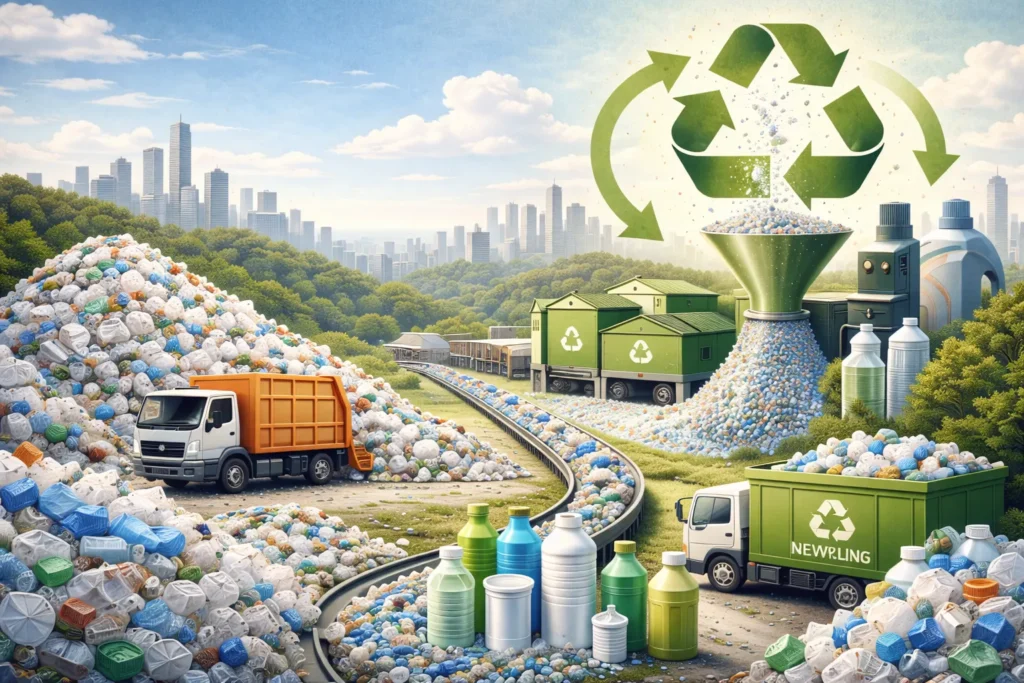
Plastic waste is one of the most visible environmental challenges of our time. Yet, the conversation is shifting from “waste management” to “resource management.” In a circular economy, plastic is not treated as a disposable material—it becomes a resource that can be recovered, processed, and used again.
This is where modern recycling companies play a critical role: converting plastic waste into usable raw materials that support manufacturing needs while reducing environmental impact.
What Does “Turning Waste Into Value” Really Mean?
When plastic is dumped into landfills or escapes into the environment, its value becomes negative—it creates cleanup costs, health risks, and long-term ecological damage.
When that same plastic is collected, sorted, cleaned, and reprocessed into high-quality recycled raw material, it gains economic value again.
The “value” comes from:
- Material recovery (plastic becomes a usable input, not an expense)
- Lower dependence on virgin plastics
- Reduced carbon footprint compared to producing new plastic (varies by polymer and process)
- Circular supply chains that improve resilience and compliance
The Recycling Process: From Waste to Raw Material
While recycling methods vary by polymer type and application, high-quality plastic recycling typically involves:
- Collection and aggregation
Plastic waste is gathered through formal and informal channels and consolidated for processing. - Sorting and segregation
Different plastics behave differently in manufacturing. Proper sorting is essential to produce consistent output. - Cleaning and contamination removal
Removing labels, dirt, oils, and mixed materials improves performance and reduces defects. - Shredding and washing
Plastics are size-reduced, washed thoroughly, and prepared for processing. - Extrusion and pelletizing/granulation
The cleaned polymer is processed into recycled granules suitable for manufacturing.
Why Circularity Matters to Businesses
Circularity is no longer just a sustainability concept. It’s becoming a business requirement.
Brands and manufacturers benefit from:
- Stable supply options through recycled raw materials
- Improved ESG performance through measurable sustainability actions
- Better readiness for EPR obligations (where applicable)
- Stronger brand credibility with customers and stakeholders
The Quality Question: Can Recycled Plastic Perform?
The answer depends on the recycler’s process controls and the intended use case. High-quality recyclers focus on:
- Consistent feedstock selection
- Robust contamination control
- Standardized processing parameters
- Quality testing aligned with customer requirements
For applications like packaging and industrial manufacturing, performance consistency matters as much as sustainability credentials.
Where RebornX Fits In
At RebornX EcoTech Pvt. Ltd., our focus is on transforming plastic waste into reliable recycled raw materials—supporting packaging, FMCG, and industrial applications while strengthening circular supply chains.